

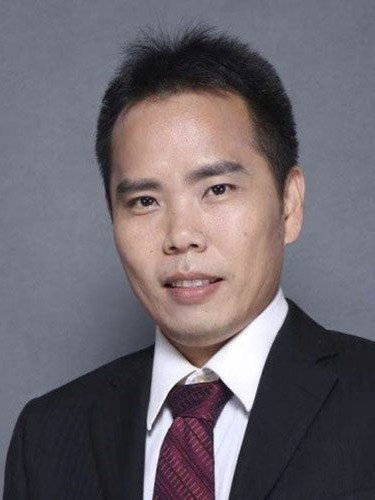
Prof. Kim Fung Tsang, Shenzhen Institutes of Advanced Technology, Chinese Academy of Sciences, China
Kim Fung, Tsang is a Fellow of IEEE, a Fellow of HKIE and a Fellow of Asia-Pacific Artificial Intelligence Association (AAIA). His accolades include the IoT Heroes Award (2016) and the IEEE Product Safety Engineering Society Outstanding Achievement Award (2021). As the architect of the IEEE Standard 2668 Maturity Index of Internet-of-Things, TSANG's contributions to the field are significant. KF is the Chairman of the following standards work group: IEEE 2668 Maturity Index for Internet of Things; IEEE P1451.5.5 LoRa Smart Sensor Interface; IEEE P1451.5.6 SigFox Smart Sensor Interface; IEEE P1451.5.10 NB IoT Smart Sensor Interface. He is an AdCom member of IEEE Systems Council as well as an AdCom member of IEEE RFID Council. Tsang is actively involved in setting IoT standards and practices, serving as a consultant and an assessor (HOKLAS). KF has been helping EMSD to implement IEEE 2668 into the government GWIN. The ultimate goal is to develop and proliferate the IoT Best Practices.
Speech Title: Standards and Information Security: Driving Global Competitiveness in the Greater Bay Area
Abstract: In the Greater Bay Area (GBA), the development of standards and information security is not merely a technical issue—it is central to regional competitiveness. As the GBA rapidly rises in fields such as artificial intelligence, the Internet of Things, and smart cities, a unified and forward‑looking standards framework has become the cornerstone for cross‑border collaboration, industrial upgrading, and internationalization.
Standards ensure interoperability and scalability of technologies while providing enterprises with a “passport” to global markets. In the GBA, this means Shenzhen, Hong Kong, Macau, and surrounding cities can innovate under a common framework, reduce duplication, and improve efficiency. At the same time, safeguarding information security is fundamental to building trust. Whether in fintech, healthcare, or smart transportation, only within a secure and reliable environment can data and services truly unlock their value.
By deeply integrating standards with information security, the GBA can attract greater international investment and cooperation, while establishing itself as a leader in the global digital economy. This is a strategic blueprint for the future: shaping order through standards and safeguarding trust through security. For professionals, it represents not only a technical challenge but also a historic opportunity to help shape the global innovation ecosystem.
Prof. Huisi Wu, Shenzhen University, China
Wu Huisi, Professor/Doctoral Supervisor, IEEE Senior Member, ACM/CCF Member, Shenzhen “Peacock Plan” Overseas High-Level Talent (Category B). Long-term research focus includes artificial intelligence, deep learning, computer vision, machine learning, medical imaging and intelligent diagnosis modeling, computer graphics, and image processing. To date, publications appear in IEEE Transactions on Medical Imaging, Medical Image Analysis, ACM Transactions on Graphics, IEEE Transactions on Multimedia, IEEE Transactions on Cybernetics, Physics in Medicine and Biology, Medical Engineering & Physics, SIGGRAPH Asia, CVPR, ICCV, AAAI, MICCAI, and other top-tier international journals and conferences. He serves as a reviewer for multiple top-tier international journals including TMI, MedIA, CVPR, ICCV, ECCV, MICCAI, and SIGGRAPH, and was a Program Committee Member for AAAI 2022-23 and IJCAI 2022, both CCF-A Class artificial intelligence conferences. His awards include the Second Prize of the National Science and Technology Progress Award from the Ministry of Education in 2009 (ranked 7th) and the Second Prize of the Shenzhen Natural Science Award in 2017 (4th author). He was a finalist for the Best Paper Award at CVPR 2024 and received the Best Paper Award at the 8th International Conference on Intelligent Systems and Knowledge Engineering (ISKE 2013). He has led over 20 research projects, including grants from the National Natural Science Foundation of China, Guangdong Provincial Natural Science Foundation, Shenzhen Basic Research Program, and Tencent's Rhino Bird Technology Innovation Project.
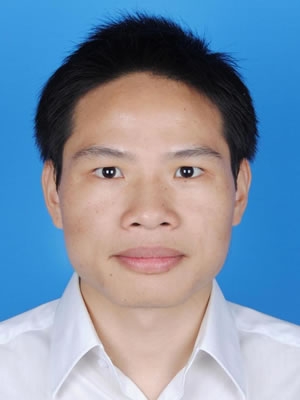
Prof. Changdong Wang, Sun Yat-sen University, China
Chang-Dong Wang received the PhD degree in computer science from Sun Yat-sen University, Guangzhou, China, in 2013. He is a visiting student with the University of Illinois at Chicago from January 2012 to November 2012. He joined Sun Yat-sen University in 2013, where he is currently a professor with the School of Computer Science and Engineering. His current research interests include machine learning and data mining. He has published more than 100 scientific papers in international journals and conferences. His ICDM 2010 paper won the Honorable Mention for Best Research Paper Awards. He won 2012 Microsoft Research Fellowship Nomination Award. He was awarded 2015 Chinese Association for Artificial Intelligence (CAAI) Outstanding Dissertation. He is an associate editor of the Journal of Artificial Intelligence Research (JAIR) and Neural Networks.
Speech Title: A multimodal embedding model for sepsis data representation
Abstract: Sepsis research has long been constrained by limited labeled data and models designed for specific tasks that primarily rely on tabular inputs, overlooking the valuable insights contained in clinical text. To address these limitations, we propose the Sepsis Data Representation Model (SepsisDRM), an embedding model that jointly processes tabular and textual data to capture comprehensive patient representations. Trained on a dataset comprising 19,526 sepsis patients, SepsisDRM demonstrates strong generalization across diverse sepsis-related tasks without task-specific tuning. It effectively stratifies patients into four clinically interpretable phenotypes and achieves robust performance in predicting 28-day outcomes, with AUC scores of 0.92, 0.94, and 0.78 on retrospective, prospective, and external datasets, respectively. As the first embedding model developed specifically for sepsis, SepsisDRM establishes a novel paradigm for sepsis research and offers a promising approach for studies in other fields that involve the integration of both tabular and textual data.
Prof. Tao Lei, Shaanxi University of Science & Technology, China
Tao Lei is a professor and doctoral supervisor at Shaanxi University of Science and Technology. He is the the distinguished member of CCF, and the Senior Member of IEEE/CSIG. He is selected from the Shaanxi Provincial High level Talent Program, Shaanxi Provincial Outstanding Youth, Stanford Top 2% Global Scientists List, etc. He is a deputy editor, editorial board member, guest editor, etc. for 7 journals, and serves as conference chairman, technical committee chairman, publicity chairman, reward committee chairman, branch chairman, etc. in more than 20 international conferences. His main research areas are computer vision, machine learning, etc. At present, He has published over 100 papers in international journals and conferences such as Nature Communication, CVPR, ICCV, AAAI and IJCAI. Among them, 14 papers are ESI highly cited papers. His Google Academic Citation has exceeded 7900. He hosted many projects such as the National Natural Science Foundation of China (5 projects), Shaanxi Provincial Outstanding Youth Fund, and Shaanxi Provincial Key Research and Development Program. He won the second prize of Shaanxi Province Science and Technology Award, the first prize of Gansu Province Higher Education Research Excellent Achievement Award, and the best paper of IEEE Transactions on Radiation and Plasma Medical Sciences as the first complete person.
Speech Title: Adaptive Learning of High-Value Regions for semi-supervised Medical Image Segmentation
Abstract: Image segmentation is a key technology in the field of computer vision. At present, a large number of research results on image segmentation have been reported and used for many fields such as industry, agriculture, entertainment, and medicine. In this report, we focus on medical image segmentation using consistency learning and uncertainty estimation methods. At present, the mainstream medical image segmentation methods face the following challenges. Firstly, accurate segmentation of medical images is difficult due to high noise and low contrast. Secondly, mainstream medical image segmentation models have a large number of parameters and slow inference speed, making it difficult to deploy on low-resource devices. Finally, pixel-level annotation of medical images is very expensive and requires professional knowledge. To address these problems, we proposed a novelty adaptive learning of high-value regions for semi-supervised medical image segmengtation, and this method shows better performance than SOTA methods.